
Free technical resources
Database engineering blog
Concise field notes on query tuning, reliability, migration, backup, and operations.
 Security & recovery · 2026-10-04
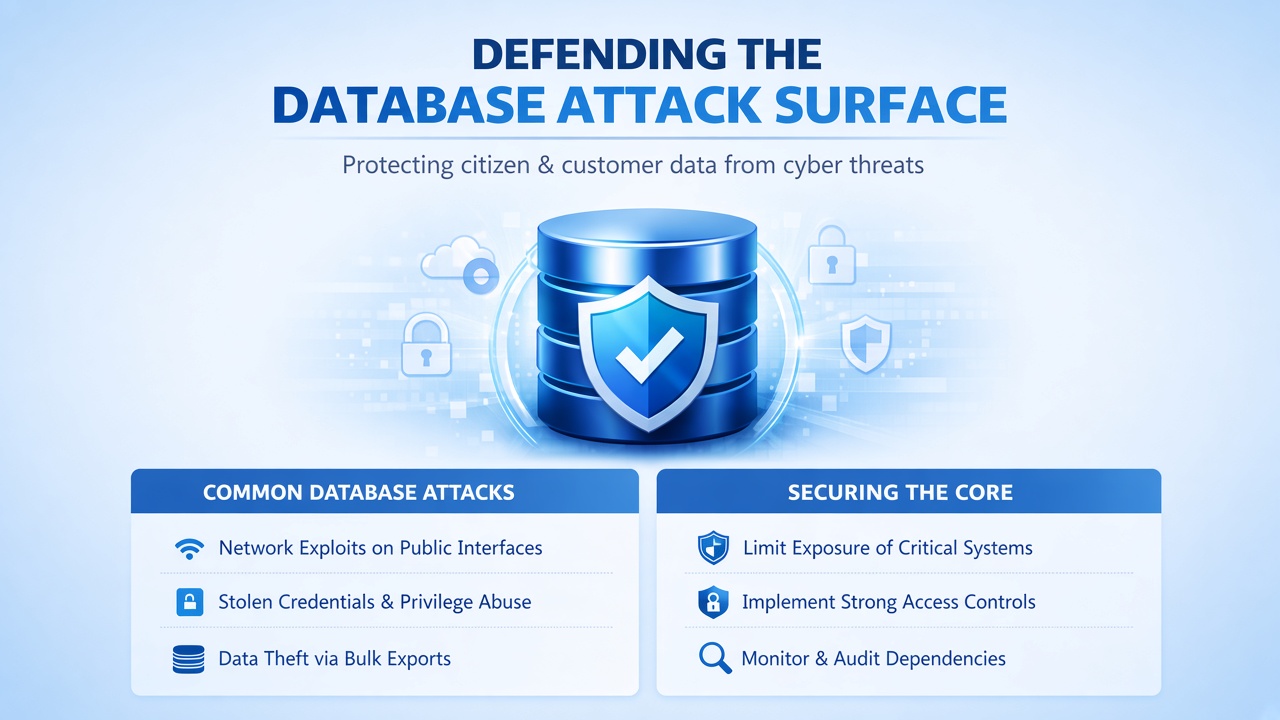
Database attack surface defense
A practical guide for DBAs, application owners, and security teams on common attack paths, control limits, detection signals, and recovery drills.
 Security & recovery · 2026-10-01
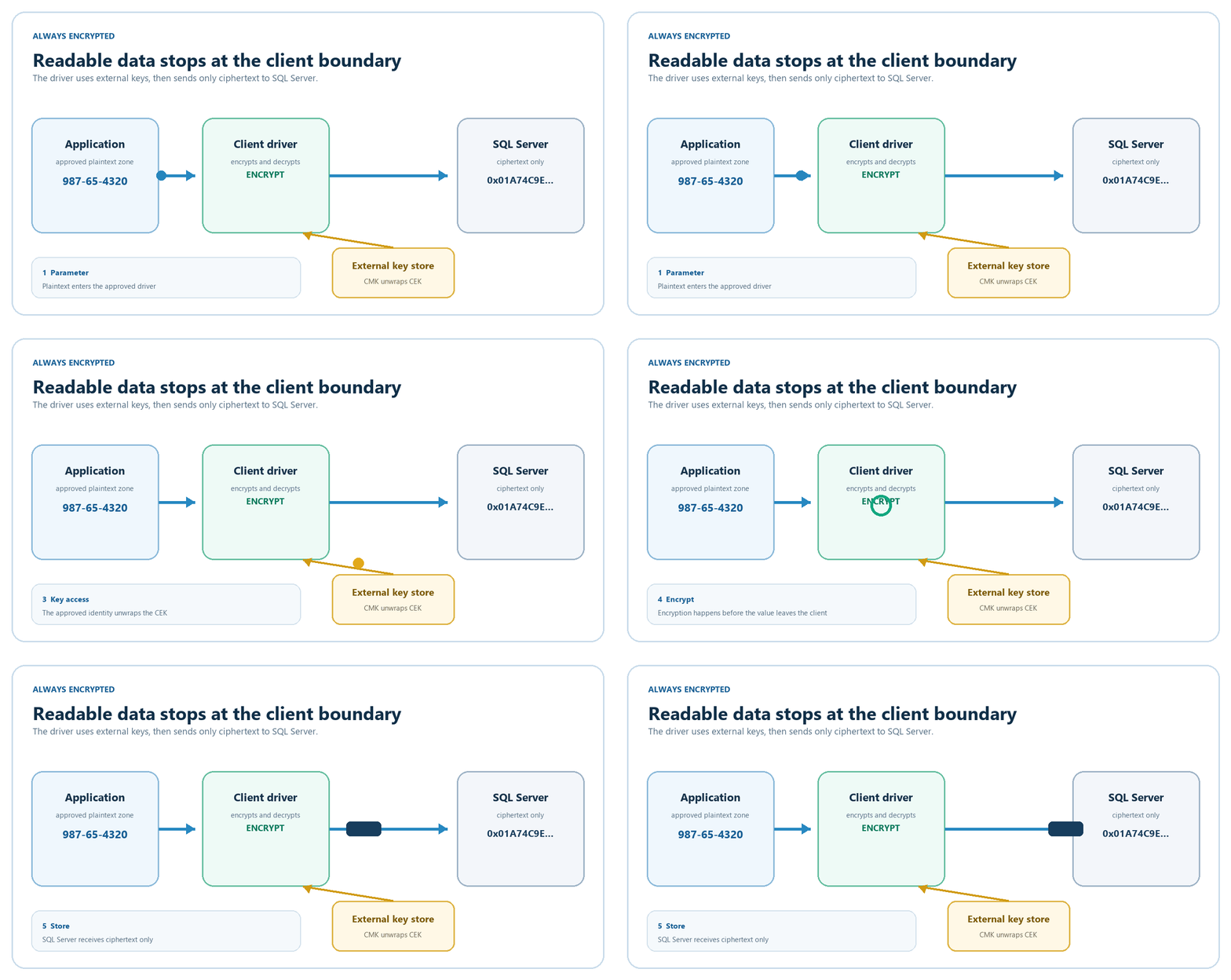
Always Encrypted in SQL Server: a practical guide
A plain-English, diagram-led guide to Always Encrypted with validated SQL, PowerShell, and C# examples.
 Security & recovery · 2026-09-28
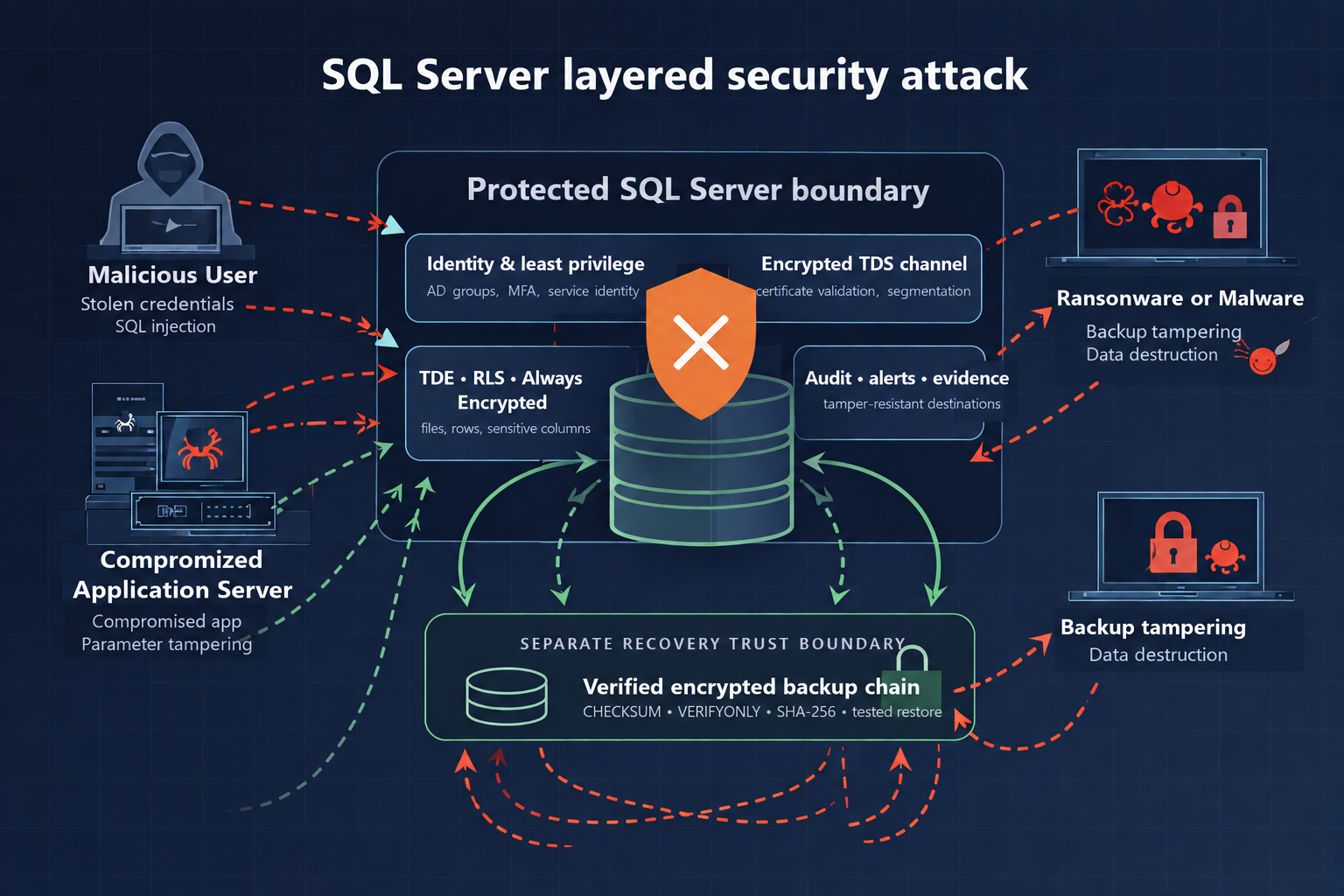
SQL Server ransomware defense: hardening, detection, and recoverable backups
Reduce SQL Server ransomware risk with concrete hardening priorities, detection sources, isolated backups, and a restore process the business can trust.
 Performance · 2026-09-27
SQL Server Wait Statistics Troubleshooting Guide
A hands-on workflow for collecting and interpreting SQL Server wait statistics without treating one wait type as an automatic diagnosis.
 AI and SQL · 2026-09-23
AI-Assisted SQL Development — From Prompting to Proof
Choose the right AI surface, write evidence-rich prompts, constrain agent behavior, and prove every SQL rewrite with plans, metrics, and result checks.
 SQL Server · 2026-09-07
In-Memory OLTP on SQL Server 2025 — create, use, and fully undeploy
Run the two-part SQL Server 2025 lab, interpret XTP memory and undeploy status, and safely remove the final memory-optimized container.
 Index · 2026-08-10
Finding used and unused indexes before you drop anything
Pair seek/scan usage with write cost before marking an index unused.
 Index · 2026-08-09
Index maintenance that fits the maintenance window
Prefer targeted reorganize over nightly rebuild-everything jobs.
 Index · 2026-08-08
Reading index fragmentation without chasing ghosts
Fragmentation only matters when scans or range seeks read many pages.
 Index · 2026-08-07
Spotting duplicate and near-duplicate indexes
Drop the redundant cover once you prove the survivor serves the same predicates.
 Query Store · 2026-08-06
Catching regressed queries with Query Store
Sort by duration delta, then confirm the plan_id that actually changed.
 Query Store · 2026-08-05
When (and when not) to force a plan in Query Store
Force only after you can name the regression trigger and a review date.
 Query Tuning · 2026-08-04
Query rewrites that beat hint stacking
A clearer shape usually beats a forced join order on the old mess.
 blog · 2026-08-03
Always On is a 22-phase build, not a checkbox
Treat AG/WSFC as gated phases — infrastructure first, failover proof last.
 blog · 2026-08-03
Compat 160 is slow after a 2016 to 2022 restore
Keep CL 130, baseline with Query Store, then fix CE regressions before cutover.
 Query Tuning · 2026-08-03
Breaking complex logic with CTEs and temp tables
Use CTEs for clarity; materialize with temp tables when estimates go wild.
 blog · 2026-08-03
A production SQL Server install checklist that survives audits
Install once against a checklist so day-two ops is boring.
 blog · 2026-08-03
SQL Server stored procedures vs inline SQL
The real fight is disciplined parameterized SQL versus undisciplined string-built queries — not SP versus inline.
 Query Tuning · 2026-08-02
Table variables for small, known rowsets
Table variables shine for small fixed lists; skip them for large unknown sets.
 blog · 2026-08-01
Assessment reports should drive tickets
Turn findings into prioritized, assignable work.
 blog · 2026-08-01
Backup verification beats backup theater
Prove restore SLAs with scheduled verification, not just successful backup jobs.
 Query Tuning · 2026-08-01
EXISTS and CROSS APPLY instead of LEFT JOIN for existence checks
Prefer EXISTS for filters; CROSS APPLY for correlated top-N lookups.
 blog · 2026-08-01
Observability for DBAs is still SQL-shaped
Bridge app traces with database wait and plan evidence.
 Query Tuning · 2026-07-31
Using IIF for simple conditional expressions
IIF is fine for short true/false expressions; keep complex branching in CASE.
 blog · 2026-07-30
Schema drift is a reliability problem
Treat schema compare as a release gate, not a quarterly cleanup chore.
 blog · 2026-07-29
Alert fatigue destroys on-call trust
Prefer actionable alerts with clear ownership and runbooks.
 blog · 2026-07-28
Reading wait stats without drowning in noise
Focus on runnable waits that explain user-visible latency.
 blog · 2026-07-26
Cutover checklists for engine migrations
Baseline, rehearse, verify, then cut — in that order.
 blog · 2026-07-22
Postgres vacuum debt compounds quietly
Watch freeze age and dead tuples before users feel the pain.
 blog · 2026-07-20
Monitor before you migrate
Baseline latency and top queries before any engine cutover.
 blog · 2026-07-16
Parameter sniffing triage in five minutes
Confirm sniffed values before rewriting every procedure.
 blog · 2026-07-14
Blocking chains beat single-query blame
Always capture the head blocker when waits spike.
 blog · 2026-07-08
Autogrowth events are silent outages
Watch growth frequency and size before users report timeouts.
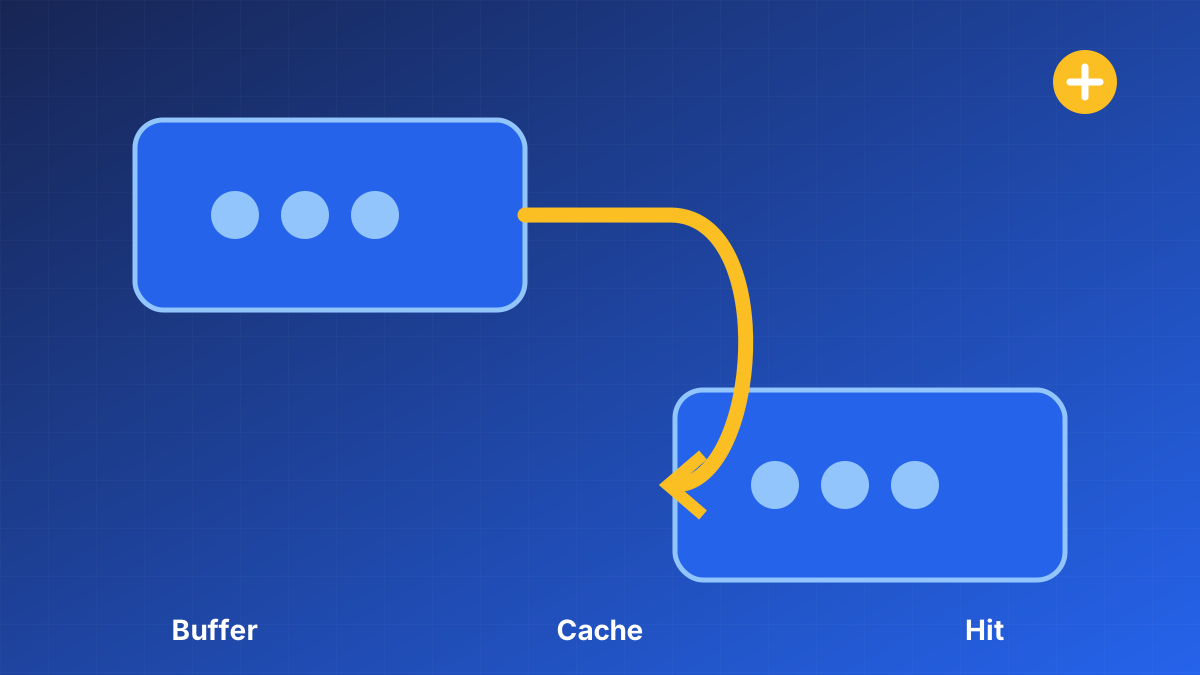 blog · 2026-07-05
Buffer cache hit ratio is not a silver bullet
Pair cache metrics with latency and IO stall evidence.