
Architecture and objectives
Translate RTO, RPO, workload behavior, failure domains, and budget into an appropriate topology.
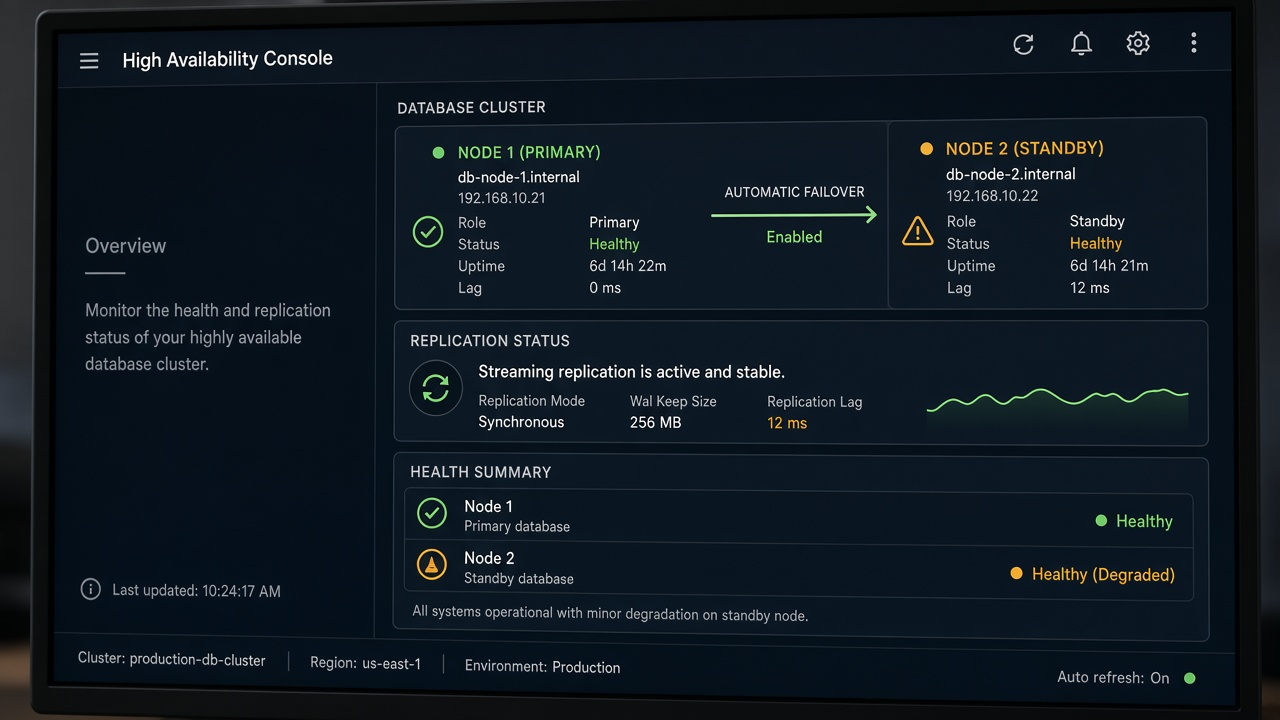
Prepare for failure before it happens
High availability reduces interruption inside an environment. Disaster recovery provides a path back when the environment itself is unavailable. Both begin with business recovery objectives and end with rehearsed procedures backed by evidence.
Core focus
Translate RTO, RPO, workload behavior, failure domains, and budget into an appropriate topology.
Document detection, decision, failover, client redirection, validation, and failback for SQL Server and PostgreSQL.
Test restores, replication state, backup chains, application connectivity, and data consistency on a regular schedule.
Typical work
Results